
IT GRC Tools: Complete Guide to Governance, Risk, and Compliance

IT GRC Tools: Complete Guide to Governance, Risk, and Compliance
IT GRC Tools
IT GRC (Governance, Risk, and Compliance) tools help organizations align IT with business objectives, manage risk proactively, and comply with regulatory requirements, all from a centralized platform.
This guide covers what IT GRC tools are, why they matter, key features, popular tools, and how to choose the right one for your organization.
What Are IT GRC Tools?
IT GRC tools are software solutions designed to help organizations manage:
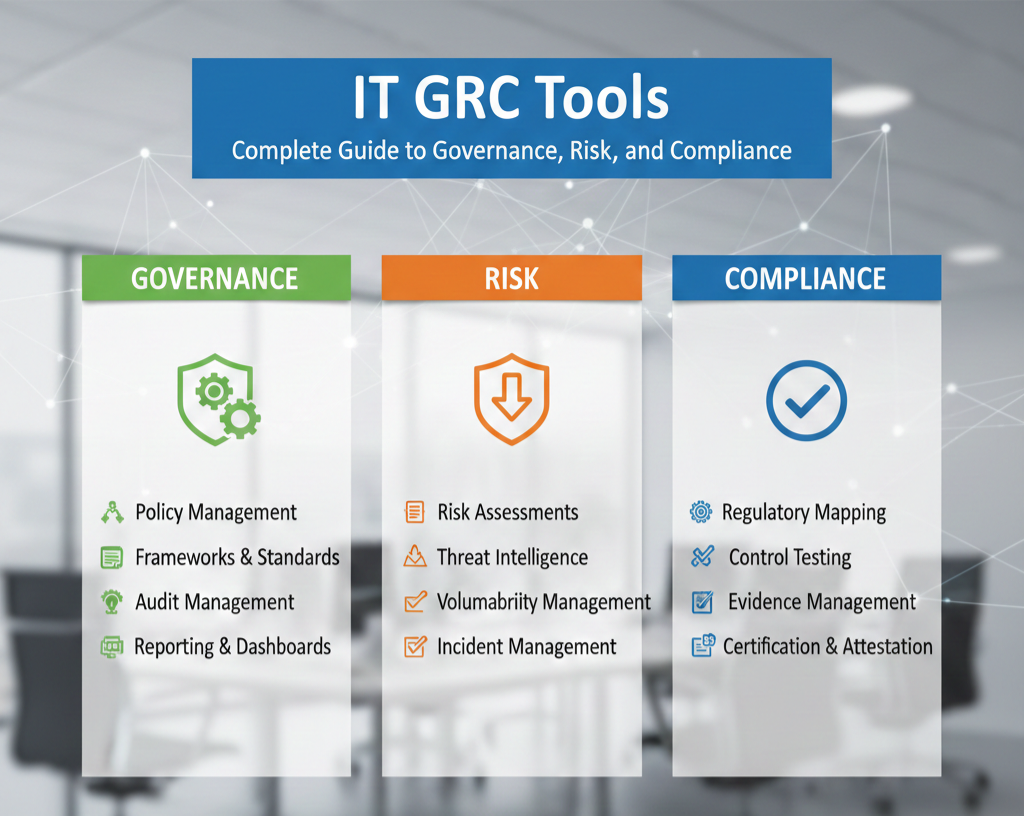
- Governance: Ensuring IT supports business goals and decision-making
- Risk: Identifying, assessing, and mitigating IT and cybersecurity risks
- Compliance: Meeting regulatory, legal, and industry standards
GRC tools empower leaders to automate, manage and report on enterprise-level risks comprehensively. These tools facilitate the risk assessment process, enable workflow automation and streamline information exchange among leaders and first-line risk owners, enhancing the identification, assessment and communication of top enterprise risks.
IT GRC solutions also support decision making through data visualization, reports and dashboards, offering insights for executives and the board, and integrating with other risk management technologies to provide a comprehensive risk view. Increasingly, GRC tools incorporate AI capabilities for advanced automation, including risk score validation, recommended controls and risk quantification.
These tools provide visibility, automation, and accountability across IT operations and security programs.

Why IT GRC Is Critical for Modern Organizations
Organizations operate in a complex regulatory and threat landscape that includes frameworks and laws such as:
Our GRC solutions supports GRC Compliance Framework such as : SOC 2, PCI DSS, NIST, CMMC, ISO 27001, ISO 27002, ISO 27003, HIPAA, NIS2, GDPR, and more.
IT GRC tools reduce risk while improving trust, transparency, and operational resilience.
IT Risk Management Software
Risk Cognizance’s IT Risk Management software empowers organizations to identify and prioritize critical IT, cyber, operational resilience, and technology-related risks, helping reduce potential financial impact.
Gain control over your IT risk landscape by proactively monitoring and managing assets, threats, vulnerabilities, and risks across your technology environment. Quickly surface your most significant exposures and take action to prevent security incidents before they occur.
Make smarter, data-driven decisions with a unified view of IT risk, threat exposure, and potential financial impact. By consolidating risk intelligence, Risk Cognizance strengthens the effectiveness of your security and risk management programs.
Simplify risk remediation and reporting through the use of industry standards and internal frameworks. Assess controls efficiently, track vulnerabilities, and deliver clear, actionable reports to stakeholders.

Dashboards and Reporting
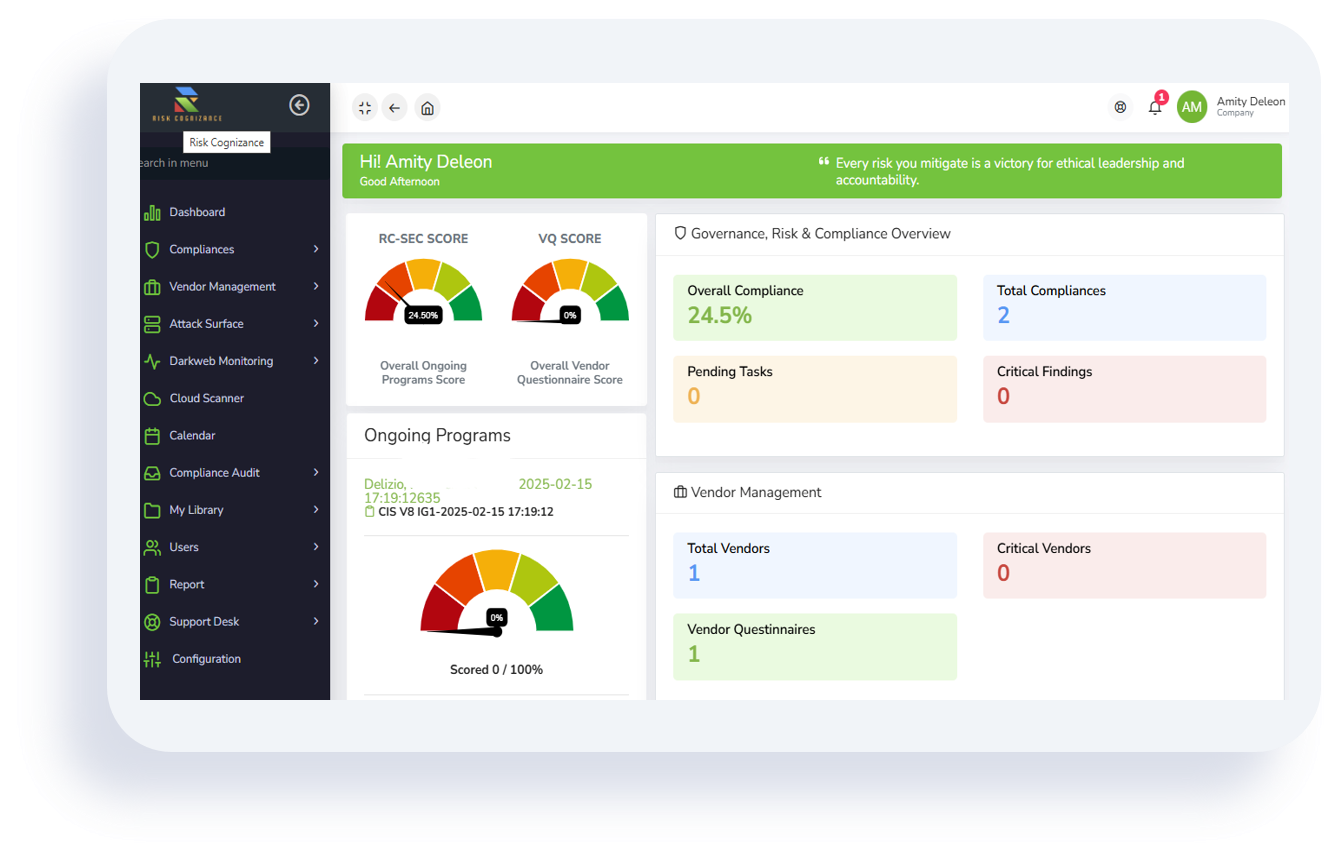
Gain real-time visibility into the status of IT assets, vulnerabilities, and remediation activities through intuitive dashboards that promote accountability and support compliance efforts.
Financial Impact Analysis
Quantify the potential financial impact of security incidents to better prioritize risks and focus mitigation efforts where they matter most.
IT Asset Monitoring
Centralize critical asset details—including asset name, type, owner, business unit, and more—into a single, comprehensive view for efficient monitoring and reporting.
IT Risk Assessments
Conduct a wide range of risk assessments, such as NIST 800-53, to evaluate your security posture, identify control gaps, and implement targeted improvements.
Regulatory Framework Alignment
Align IT asset and risk management practices with regulatory requirements and security certifications to maintain continuous compliance.
Risk and Control Mapping
Associate IT assets with related risks and controls to improve risk evaluation, prioritize remediation actions, and reduce the likelihood of security incidents.
Threat Assessments
Integrate seamlessly with third-party security tools to identify, track, and correlate vulnerability and threat data across your environment.
Ticketing System Integration
Monitor issues and incidents through integrated ticketing systems to gain immediate insight into remediation status and progress.
Risk Analytics and Insights
Easily customize dashboards and reports to communicate risk insights effectively, support informed decision-making, and tell a compelling risk story.
Tackling risk and improving resilience
Organizations increasingly rely on GRC tools to gain control of unwieldy governance, risk, and compliance objectives. With the stakes high and growing, organizations need GRC tools to bridge gaps between business teams and address friction between IT and business goals.