
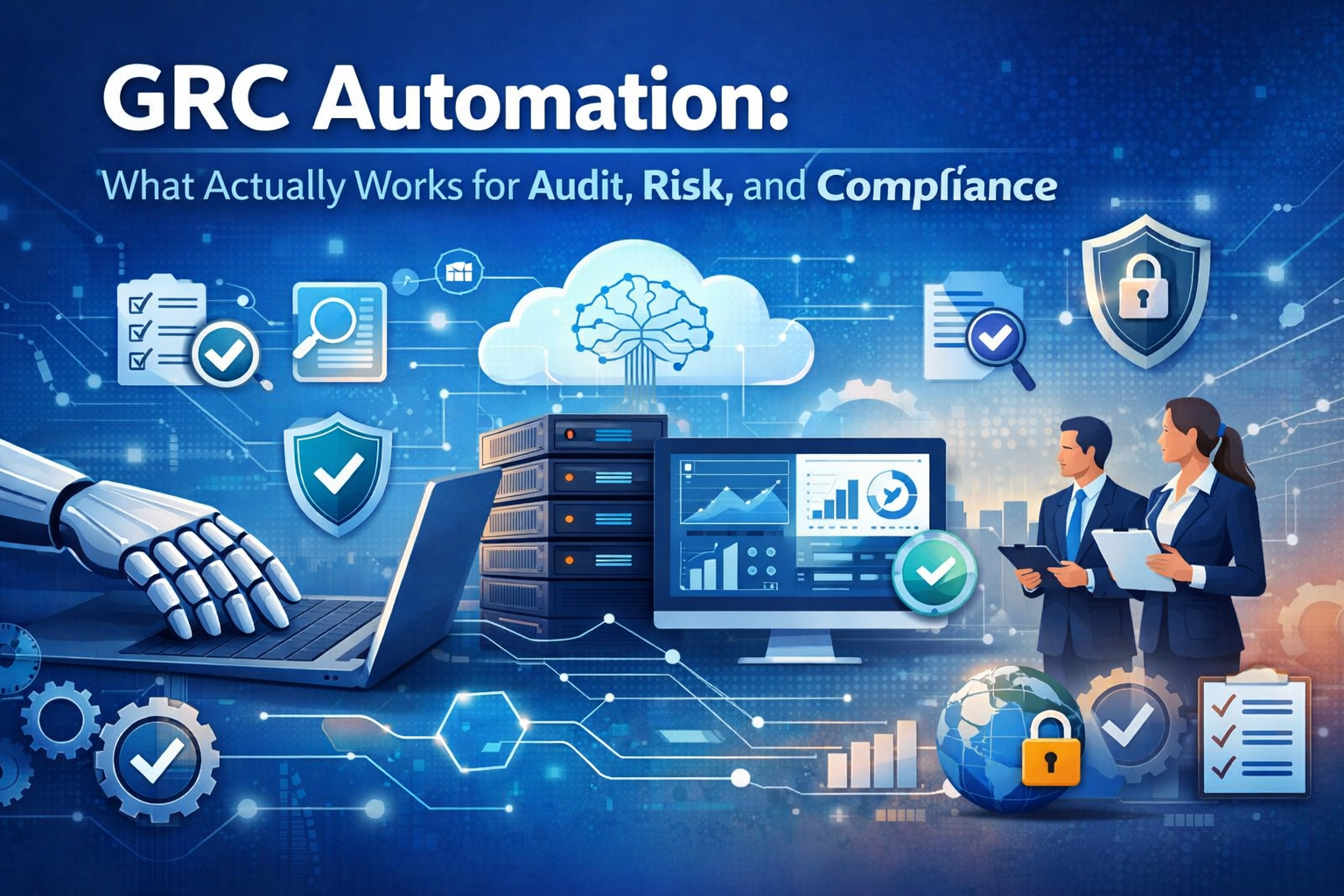
GRC Automation: What Actually Works for Audit, Risk, and Compliance
GRC Automation: What Actually Works for Audit, Risk, and Compliance
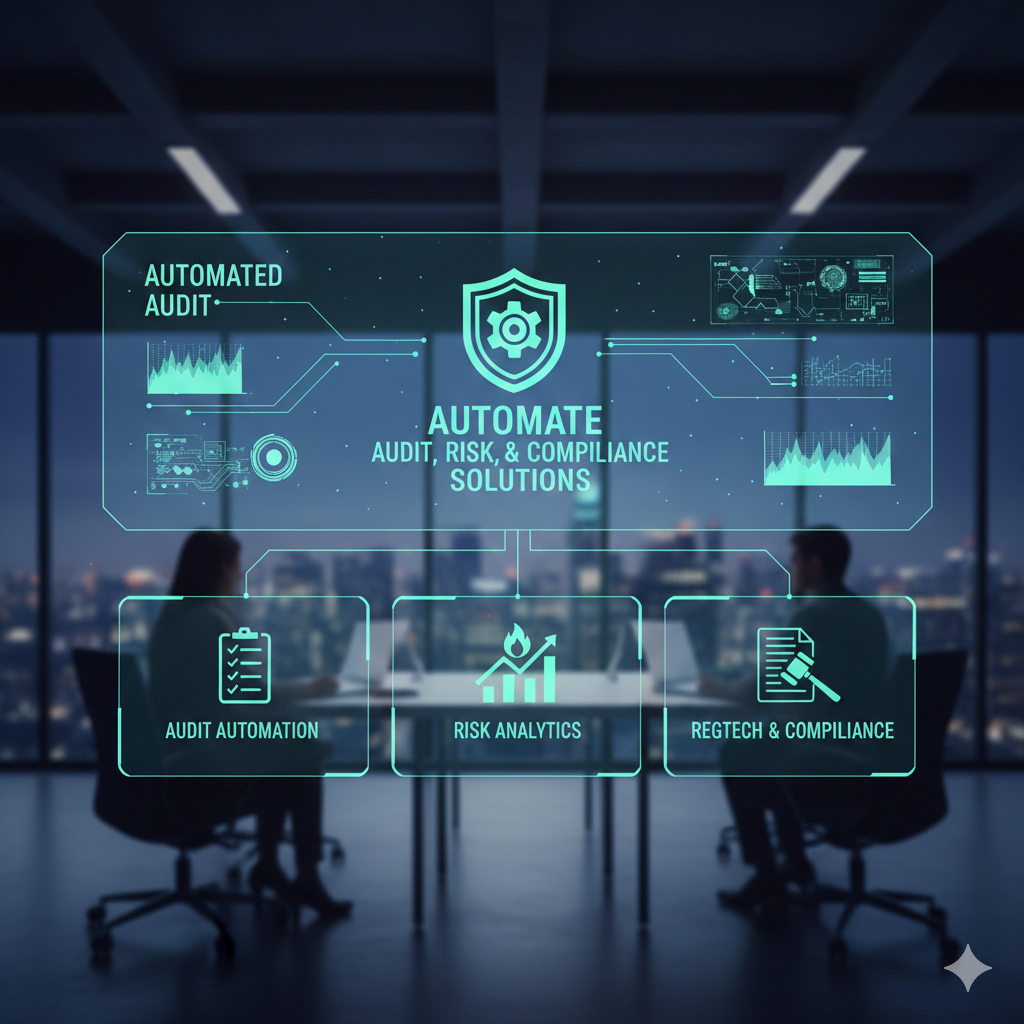
Automate Audit, Risk, and Compliance Solutions
For years, Governance, Risk, and Compliance (GRC) programs have relied on fragmented spreadsheets, manual evidence collection, and disruptive “audit seasons” that strained teams across the organization. In 2025, that model is no longer sustainable.
GRC automation has evolved beyond theoretical promise into a mature, operational reality. With AI-driven insights and real-time system integrations, modern GRC platforms are transforming compliance from a periodic obligation into a continuous, strategic capability.
Getting Started with GRC Automation
Transitioning from manual processes to an automated GRC framework requires more than software—it demands a deliberate, structured approach aligned with business objectives.
1. Assess Your Current State
Begin by documenting existing workflows and identifying inefficiencies. Common pain points include excessive email-based evidence collection, limited visibility into third-party risks, and duplicated effort across compliance frameworks. Many organizations discover that up to 80% of compliance effort is spent on administrative tasks rather than meaningful risk reduction.
2. Define Clear, Measurable Objectives
Automation initiatives should be driven by outcomes, not ambition alone. Establish SMART goals such as:
- Reduce SOC 2 audit preparation time by 30%
- Automate 50% of control testing by Q4
- Maintain real-time visibility across 100% of cloud assets
Clear objectives ensure measurable return on investment and stakeholder alignment.
3. Select the Right GRC Platform
Choose a solution that supports one-to-many control mapping, enabling a single control to satisfy multiple frameworks (e.g., ISO 27001, SOC 2, HIPAA). This “test once, satisfy many” approach is foundational to scalable compliance operations.
4. Centralize Data and Integrations
A GRC platform is only as effective as the data it consumes. Integrate directly with operational systems to ensure accuracy and continuity, including:
- Cloud Platforms: AWS, Azure, Google Cloud
- HR Systems: Workday, BambooHR (for automated onboarding and offboarding controls)
- Development & IT Tools: Jira, GitHub, CI/CD pipelines

Getting Started with GRC Automation Using Risk Cognizance
Risk Cognizance GRC is purpose-built to align regulatory requirements with day-to-day business operations. Organizations can accelerate adoption through the following steps:
Deploy a Centralized GRC Hub
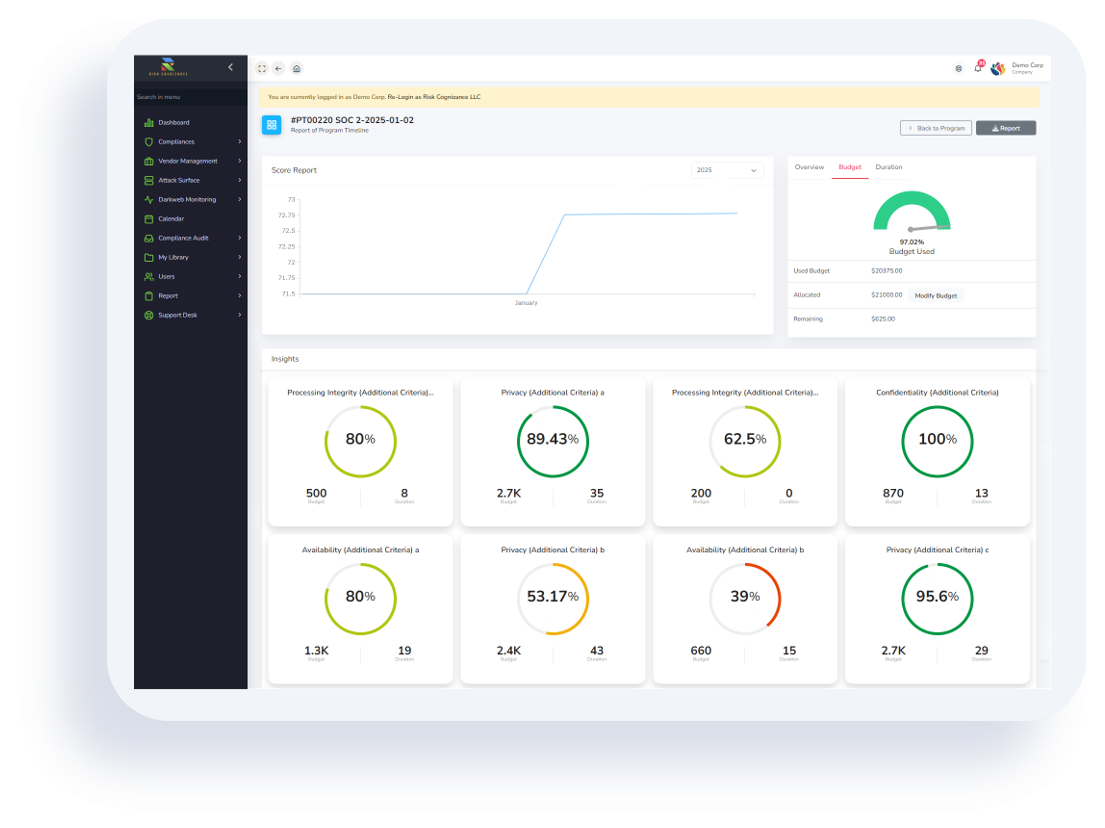
Register all risks, controls, and audit artifacts within a single cloud-based portal. This “single pane of glass” provides real-time visibility for executives, security teams, and external auditors alike.
Leverage Pre-Built Compliance Frameworks
Access an extensive library of industry standards—including NIST 800-53, ISO 27001, GDPR, CMMC, and HIPAA—to eliminate the need to build control sets from scratch and accelerate time to compliance.
Activate AI-Driven Risk Intelligence
Risk Cognizance applies machine learning to detect emerging risks, correlate findings across systems, and recommend remediation actions aligned with industry best practices.
Enable Continuous Monitoring
Replace point-in-time assessments with continuous control monitoring. Automated workflows and real-time alerts ensure that control failures are identified and addressed immediately—not months later during an audit.
GRC Automation in Practice: Three High-Impact Use Cases
GRC automation delivers measurable value through practical, operational improvements.
1. Automated Evidence Collection
Instead of manually requesting screenshots and configuration exports, automated GRC platforms connect directly to systems via API. Evidence is collected automatically, time-stamped, and mapped to the appropriate control.
Outcome: Up to a 90% reduction in manual effort and a significant decrease in audit fatigue.
2. Third-Party Risk Management (TPRM)
Automated workflows streamline vendor assessments by distributing questionnaires, analyzing responses with AI, and assigning dynamic risk scores. These insights are enriched with historical data and publicly available breach intelligence.
Outcome: Faster vendor onboarding and proactive mitigation of supply chain risk.
3. Dynamic Risk Scoring
Static, annual risk registers are replaced with real-time risk scoring driven by Key Risk Indicators (KRIs). When vulnerabilities or control failures are detected, associated risk scores update automatically.
Outcome: Leadership gains timely, data-driven insights to support informed decision-making.
Risk Cognizance GRC: A Trusted Platform for Integrated Risk Management
In an environment of accelerating regulatory change, Risk Cognizance delivers a unified, scalable approach to governance, risk, and compliance.
- Comprehensive Coverage: Risk, compliance, audit, policy management, incident response, and audit trails in a single platform
- Enterprise Scalability: Supports organizations from initial SOC 2 readiness to complex, global compliance programs
- User-Focused Design: Intuitive workflows, rapid adoption, and continuous support across all stakeholders
By eliminating silos and embedding compliance into daily operations, Risk Cognizance enables organizations to build resilience—not just pass audits.