
GRC Cloud Solutions Cybersecurity Through Governance and Risk Management

GRC Cloud Solutions Cybersecurity Through Governance and Risk Management
As cyber threats grow more sophisticated and regulatory demands continue to expand, organizations are rethinking how they manage risk. Traditional, siloed approaches to governance, risk, and compliance (GRC) are no longer enough, especially in cloud-first environments.
This is where GRC cloud solutions step in, offering integrated cybersecurity tools that help organizations stay secure, compliant, and resilient. Artificial intelligence is playing an increasingly important role, enabling faster risk detection and smarter decision-making.
Why GRC in the Cloud Is Reshaping Cybersecurity
Cybersecurity is no longer just an IT issue; it is a business imperative. Cloud-based GRC platforms reshape cybersecurity by centralizing risk management, automating compliance processes, and providing real-time visibility across the organization. Instead of reacting to incidents after they occur, companies can proactively identify vulnerabilities, assess risk, and enforce controls before threats escalate.
AI enhances these capabilities by analyzing large volumes of data, detecting anomalies, and predicting potential risks that might be missed by human oversight.
By moving GRC to the cloud, organizations gain agility, scalability, and continuous oversight, critical advantages in today’s fast-changing threat landscape.

Understanding Cloud-Based GRC and Its Role in Modern Enterprises
Cloud-based GRC platforms unify governance policies, risk assessments, and compliance requirements into a single system. This allows teams across security, IT, legal, and leadership to collaborate using shared data and consistent frameworks. AI-powered analytics can further improve risk scoring, trend detection, and regulatory forecasting.
- Modern enterprises benefit from:
- Centralized risk and compliance data
- Automated workflows and reporting
- Faster adaptation to regulatory changes
- Improved accountability and transparency
The result is a stronger alignment between cybersecurity strategy and business objectives.
Essential Cybersecurity Tools Within GRC Cloud Platforms
GRC cloud solutions often include or integrate with key cybersecurity tools that enhance protection and oversight, such as:
- Risk assessment and scoring tools to identify and prioritize threats
- Continuous monitoring for control effectiveness and policy adherence
- Third-party risk management to assess vendor and supply-chain exposure
- Incident tracking and response workflows
- Audit and compliance management mapped to standards like ISO 27001, SOC 2, HIPAA, and GDPR
- AI-driven insights to predict vulnerabilities and suggest preventive measures
Together, these tools help organizations move from fragmented security efforts to a unified, risk-aware posture.
From Risk to Resilience: How GRC Cloud Strengthens Security Posture
A strong cybersecurity program is not just about preventing attacks; it is about resilience. GRC cloud platforms help organizations anticipate risk, respond faster to incidents, and recover more effectively.
By linking cybersecurity controls directly to business risks and leveraging AI-powered risk intelligence, organizations can:
- Prioritize high-impact threats
- Reduce security blind spots
- Improve decision-making during incidents
- Strengthen long-term resilience
This shift transforms cybersecurity from a defensive function into a strategic advantage.

GRC Cloud Explained: Governance, Risk, and Compliance Working Together
When governance, risk, and compliance operate in silos, gaps emerge. GRC cloud solutions eliminate these gaps by aligning policies, risk assessments, and regulatory requirements within a single framework. AI can automate compliance checks, flag deviations, and provide predictive insights for risk mitigation.
Governance defines what should happen, risk management evaluates what could go wrong, and compliance ensures what must be followed. In the cloud, these elements work together seamlessly, providing clarity, consistency, and confidence across the organization.
Securing the Cloud: How GRC Tools Enable Smarter Cybersecurity Decisions
Cloud environments introduce unique risks, from misconfigurations to shared responsibility challenges. GRC cloud tools help security teams make smarter decisions by offering real-time insights into risk exposure and control effectiveness. AI-powered analytics can identify patterns, highlight emerging threats, and suggest corrective actions faster than traditional processes.
With data-driven dashboards and automated alerts, leaders can quickly understand where vulnerabilities exist and take action before issues turn into incidents.
The Rise of GRC Cloud Solutions in Today’s Threat Landscape
As cyber threats evolve and regulations become more complex, the adoption of GRC cloud solutions continues to rise. Organizations are recognizing that effective cybersecurity requires more than isolated tools; it demands an integrated, risk-based approach. AI in GRC is accelerating this transformation by enabling predictive risk management, automated compliance, and smarter decision-making.
By strengthening governance and risk management through the cloud, GRC platforms empower organizations to stay compliant, secure, and prepared for what is next.
How Risk Cognizance Supports Organizations with GRC
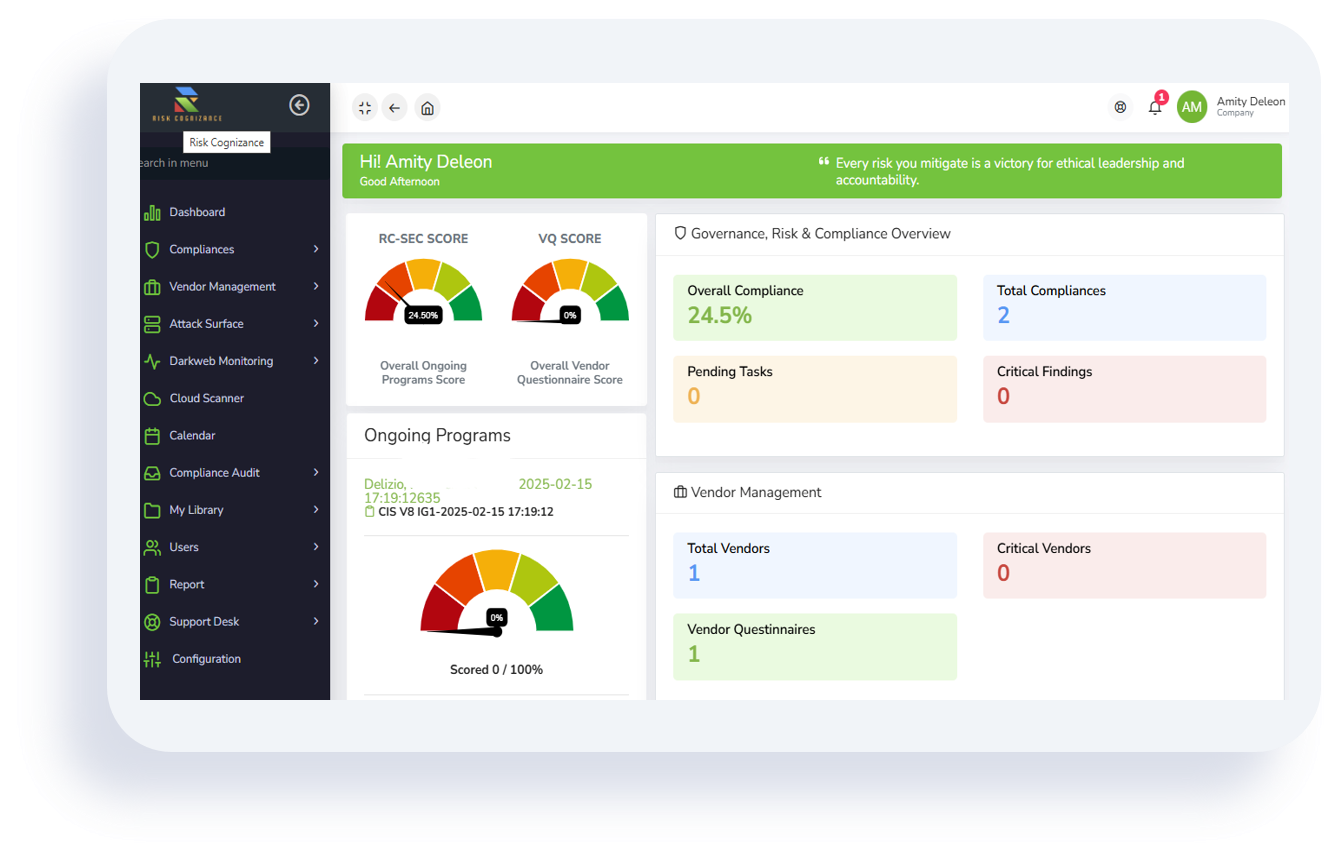
The Risk Cognizance GRC platform provides a comprehensive cloud-based solution designed to strengthen cybersecurity and risk management. Its AI-driven tools help organizations automate risk assessments, monitor compliance in real time, and gain actionable insights into vulnerabilities. With customizable dashboards, regulatory alignment, and advanced reporting, Risk Cognizance empowers teams to make informed, proactive decisions, ensuring governance, risk, and compliance work seamlessly together.
By leveraging Risk Cognizance, organizations can move from reactive security practices to a proactive, risk-aware approach that supports resilience, compliance, and long-term business success.