
How Continuous Monitoring and Validation Actually Work in Governance, Risk, and Compliance (GRC) Tools
How Continuous Monitoring and Validation Actually Work in Governance, Risk, and Compliance (GRC) Tools
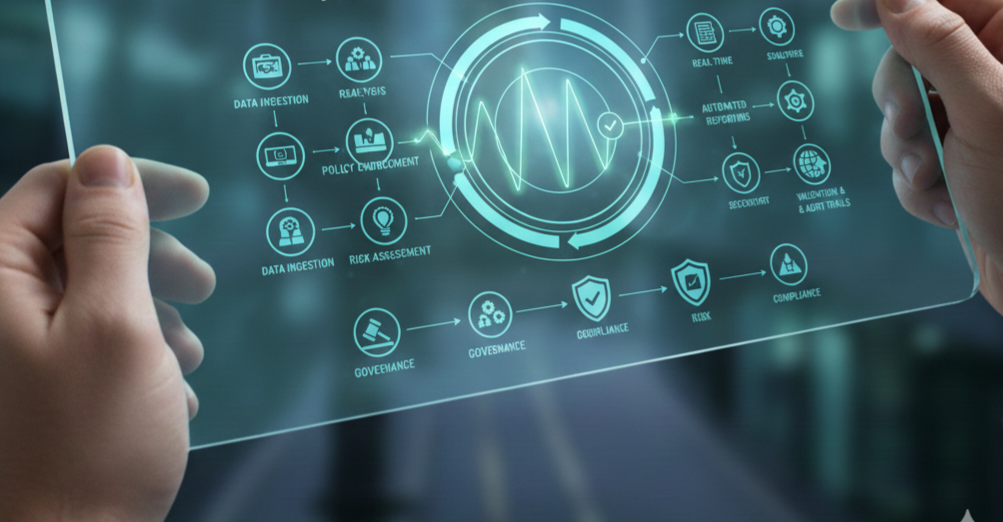
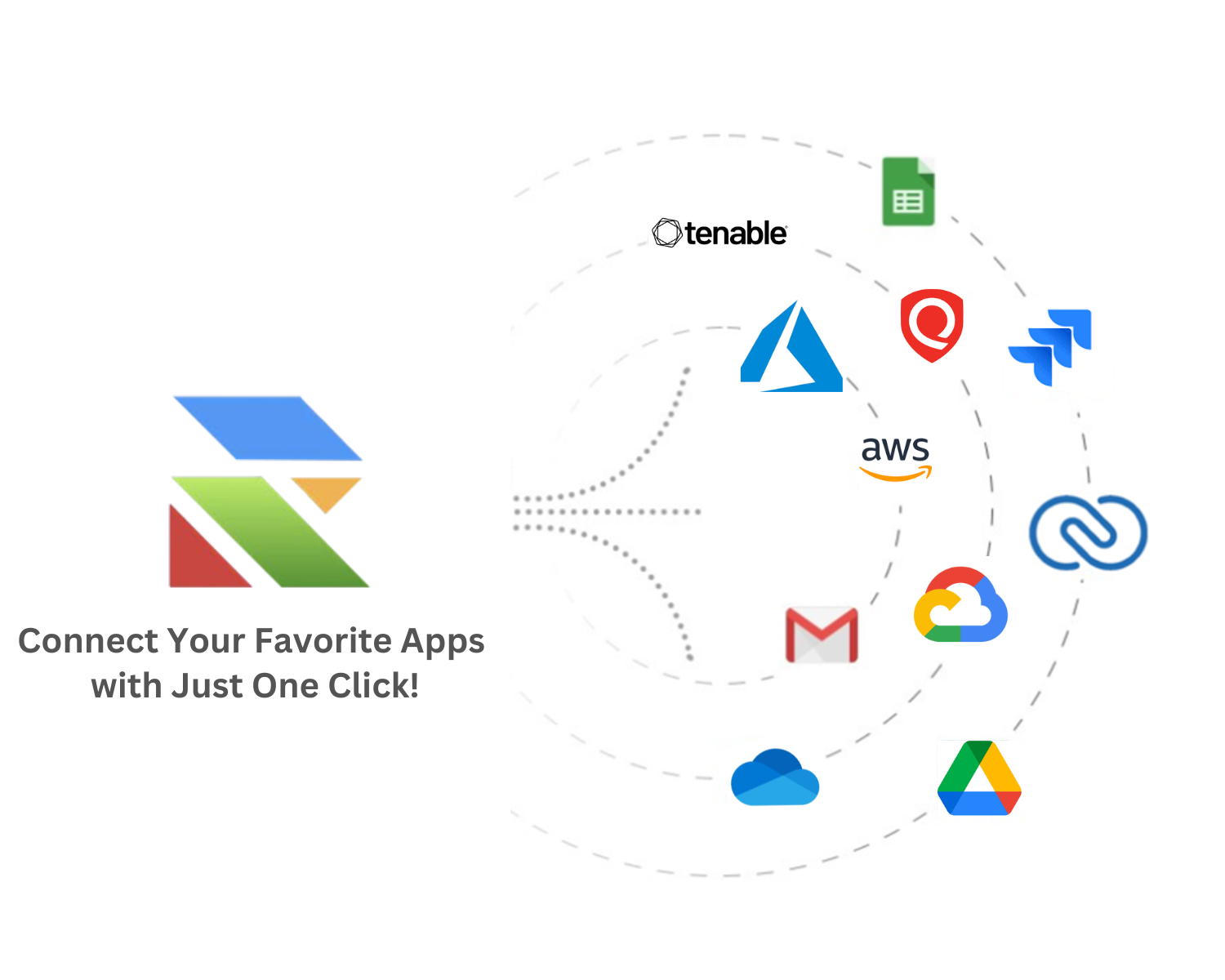
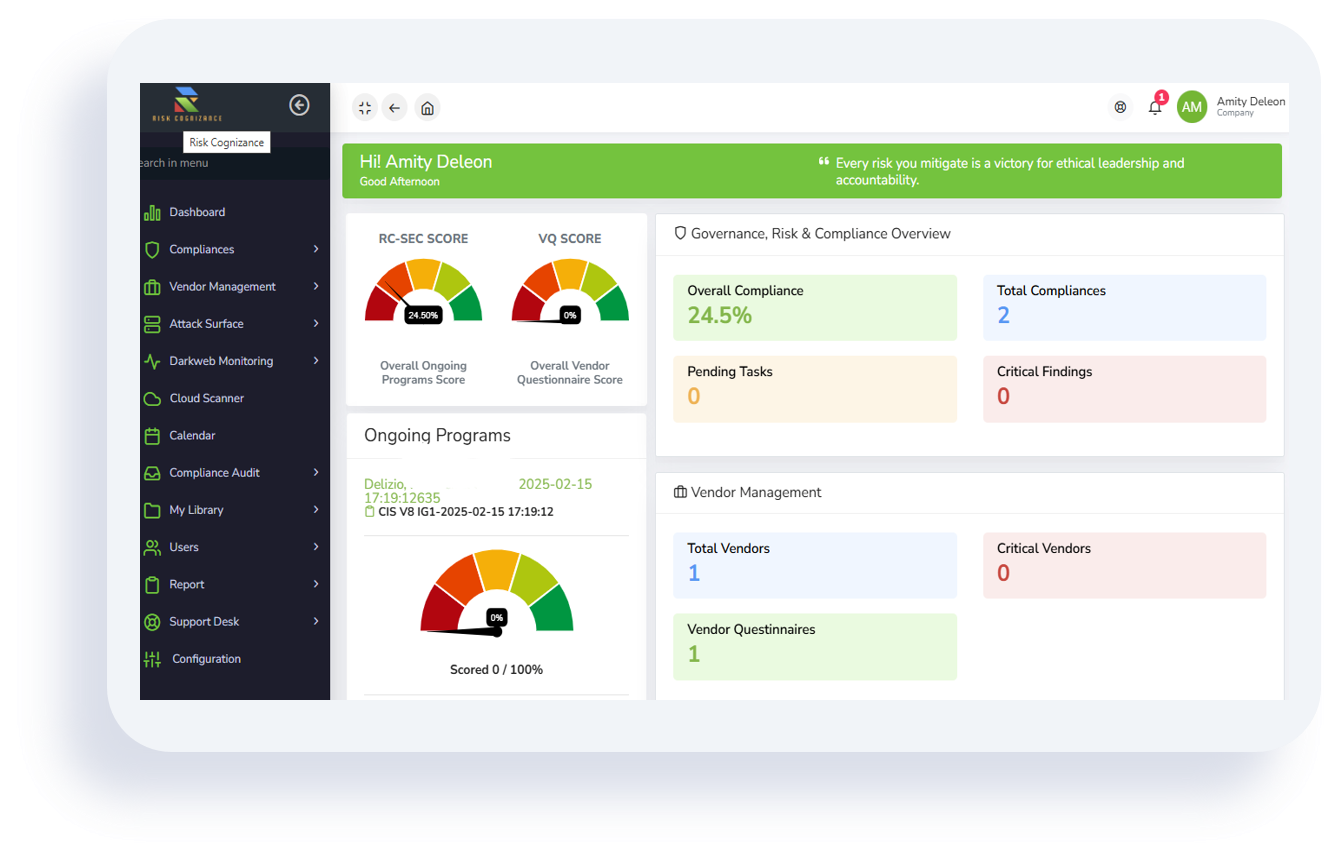
Continuous Monitoring & Validation (CMV) in GRC tools works by automating the constant collection and analysis of data from IT systems, security tools, and vendors to check controls against policies/regulations, providing real-time alerts for issues (deviations) and streamlining remediation, moving GRC from periodic audits to ongoing, automated assurance. GRC platforms integrate directly with your tech stack (e.g., AWS, Azure, Jira, Okta), automatically gathering evidence, testing controls, flagging misconfigurations, and triggering automated workflows for remediation, ensuring always-on compliance and proactive risk management.
Governance, Risk, and Compliance (GRC) programs are rapidly evolving from static, audit-driven exercises into dynamic systems of continuous assurance. At the center of this evolution are continuous monitoring and validation—capabilities that enable organizations to detect risk in real time, validate control effectiveness, and maintain regulatory confidence year-round. leadership, regulators, and customers.
Over 250 Integrated Apps and API access to all of our system.
Automating risk management, with workflow, and our AI compliance management tools.

What Continuous Monitoring and Validation Mean in Modern GRC
Continuous Monitoring
Continuous monitoring is the automated, ongoing observation of controls, systems, and processes to detect deviations from compliance or risk thresholds.
Rather than relying on periodic reviews, GRC tools continuously track:
- Control performance
- Policy adherence
- Security and operational events
- Regulatory requirement alignment
Continuous Validation
Validation ensures that controls are not only present but working as intended. GRC tools validate effectiveness by:
- Testing controls against real system data
- Verifying evidence authenticity and freshness
- Confirming remediation actions are implemented and sustained
Together, monitoring answers “What’s happening now?”
Validation answers “Is it actually working?”
How Continuous Monitoring Works in GRC Tools
1. Automated Data Ingestion
GRC platforms integrate with cloud environments, security tools, HR systems, ERP platforms, and third-party vendors to ingest real-time data.
This eliminates manual evidence collection and reduces blind spots.
2. Control Mapping and Risk Alignment
- Controls are mapped to:
- Regulatory requirements
- Business processes
- Risk categories
- This ensures monitoring is risk-prioritized, not generic.
3. Real-Time Alerts and Thresholds
When a control fails, degrades, or exceeds risk tolerance, the system generates alerts and triggers workflows—enabling immediate response.
4. Continuous Compliance Scoring
Many GRC tools provide live compliance or risk scores, offering instant insight into organizational posture.
How Continuous Validation Works in GRC Tools
Evidence Freshness Checks
Validation mechanisms ensure evidence is current, complete, and reliable—flagging outdated or missing data.
Control Effectiveness Testing
Controls are tested against actual configurations and activities, not just documented procedures.
Automated Re-Testing
After remediation, controls are re-validated automatically to confirm risk reduction.
Audit-Ready Traceability
Every validation step is logged, creating a defensible, transparent audit trail.
Why Risk Cognizance Changes the Value of Continuous GRC
Without Risk Cognizance, continuous monitoring becomes noise.
With Risk Cognizance, it becomes actionable intelligence.
- Risk-aware GRC tools:
- Prioritize alerts by business impact
- Focus validation on high-risk controls
- Enable proactive risk mitigation
- Provide leadership with meaningful insights
Stakeholder Value: One Capability, Multiple Perspectives
For Executive Leadership
From Periodic Assurance to Continuous Confidence
Executives need clarity—not data overload. Risk Cognizance–driven continuous monitoring provides:
- Real-time visibility into enterprise risk exposure
- Early warning signals for regulatory and operational threats
- Reduced audit and remediation costs
- Confidence to pursue growth without blind risk
Leadership Insight:
Continuous validation turns compliance from uncertainty into predictable governance.
For Regulators
Demonstrable, Ongoing Control Effectiveness
Regulators increasingly expect organizations to prove that controls operate continuously—not just at audit time.
- Continuous GRC capabilities deliver:
- Evidence of ongoing compliance
- Transparent control performance history
- Clear accountability and escalation paths
- Reduced reliance on manual attestations
Regulatory Insight:
Continuous monitoring shows that compliance is embedded—not episodic.
For Customers
Trust Through Continuous Assurance
Customers care about reliability, security, and resilience. Continuous GRC validation ensures:
- Faster detection of issues that could affect service or data
- Fewer disruptions caused by compliance failures
- Transparent proof of strong governance practices
- Confidence in long-term partnerships
Customer Insight:
Continuous assurance signals that trust is continuously earned—not periodically claimed.
Common GRC Challenges Solved by Continuous Monitoring
| Traditional Challenge | Continuous GRC Outcome |
|---|---|
| Manual evidence collection | Automated, real-time data |
| Point-in-time audits | Continuous audit readiness |
| Reactive remediation | Early risk detection |
| Compliance fatigue | Risk-focused prioritization |
The Future of Continuous GRC
As GRC tools adopt AI, machine learning, and predictive analytics, continuous monitoring and validation will evolve from detection to anticipation identifying emerging risks before controls fail.
Organizations that embed Risk Cognizance into their GRC programs will lead with confidence, transparency, and resilience.
Conclusion
Continuous monitoring and validation are no longer advanced GRC featuresthey are foundational capabilities. When aligned with Risk Cognizance, they transform GRC tools into engines of real-time risk awareness, regulatory confidence, and stakeholder trust.
Compliance isn’t about proving the past.
It’s about controlling the present and preparing for the future.