

Compliance Automation Tools: A Guide to Regulatory Success
Compliance Automation Tools: A Guide to Regulatory Success
Compliance Automation Tools: A Guide to Regulatory Success
Compliance is no longer a checkbox exercise. It is a risk management discipline that directly impacts business resilience, stakeholder trust, and long-term growth.
Organizations that adopt a Risk Cognizance–driven compliance automation approach move beyond reactive compliance. They gain continuous visibility into regulatory risk, stronger control effectiveness, and the confidence to operate in highly regulated environments.
This guide explains how compliance automation when aligned with Risk Cognizance delivers value to executive leadership, regulators, and customers alike.
Compliance Automation Through the Lens of Risk Cognizance
Compliance automation tools streamline regulatory processes such as control monitoring, evidence collection, reporting, and audits. When powered by Risk Cognizance, these tools become more than operational aids, they act as risk intelligence platforms.
Instead of asking only “Are we compliant?”, organizations gain answers to deeper questions:
- Where are our highest regulatory risks?
- How are these risks changing over time?
- Are our controls effective on a continuous basis?
This approach supports major frameworks and regulations including:
- SOC 2, PCI DSS, NIST, CMMC, ISO 27001, ISO 27002, ISO 27003, PCI DSS, NIST, CMMC, HIPAA, CCPA, GDPR. and many others.
All while maintaining a clear line of sight between regulations, risks, and business outcomes.

Why Risk Cognizance Is Essential to Modern Compliance
Compliance Is Enterprise Risk
Regulatory failures carry financial penalties, operational disruption, and reputational damage. Risk-aware automation ensures compliance activities are prioritized based on risk exposure, not administrative convenience.
Continuous Risk Visibility
Risk Cognizance replaces point-in-time assessments with real-time monitoring, allowing organizations to detect control gaps before they escalate.
Proactive, Informed Action
By combining automation with risk intelligence, organizations reduce exposure, respond faster, and avoid last-minute remediation.
Strategic Confidence
Leadership gains clear, timely insights that support confident decision-making across growth, innovation, and governance.
Core Capabilities of Risk-Aware Compliance Automation
To support Risk Cognizance, compliance automation tools should provide:
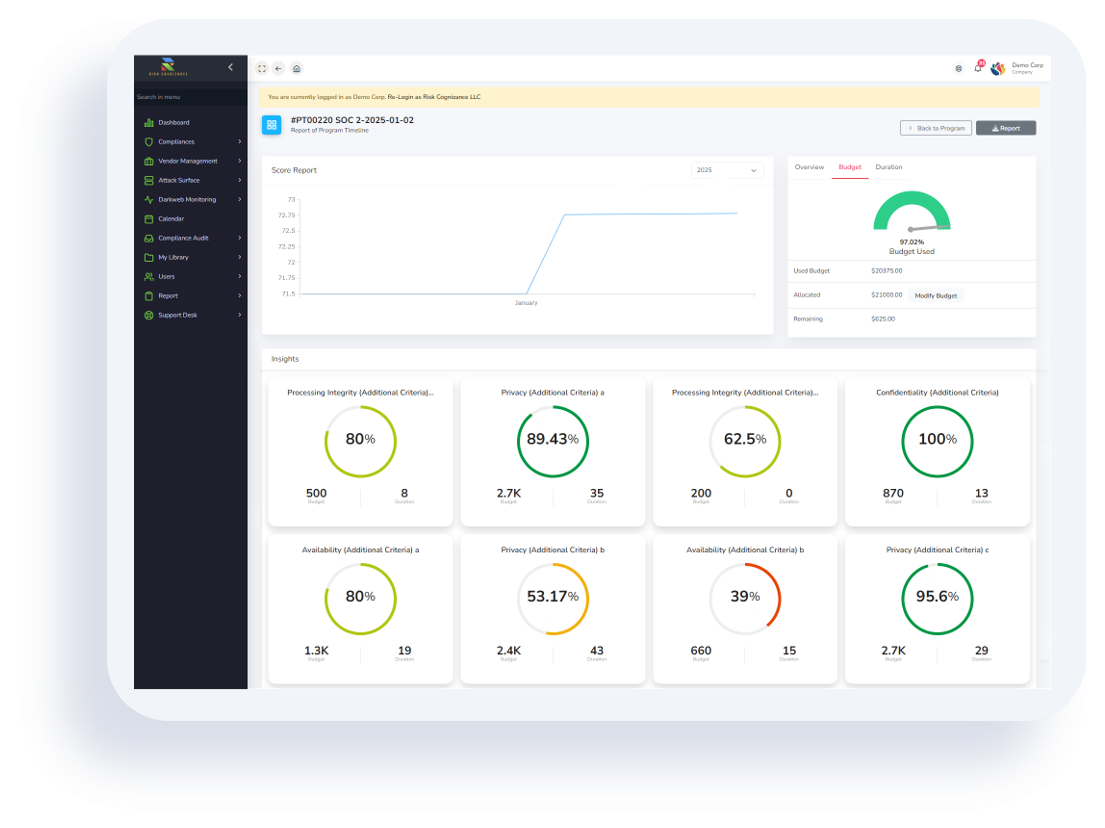
- Unified Risk & Compliance Dashboards
A centralized view linking regulations, risks, controls, and ownership. - Automated, Risk-Weighted Evidence Collection
Continuous data gathering from cloud, IT, HR, and security systems—prioritized by risk impact. - Dynamic Policy and Control Management
Policies and controls that adapt to regulatory change and emerging threats. - Integrated Risk Assessment
Ongoing identification, scoring, and tracking of compliance-related risks. - Audit Readiness with Context
Reports that demonstrate both regulatory adherence and control effectiveness. - Workflow Automation and Accountability
Clear ownership, escalation paths, and alerts when risk thresholds are exceeded.
Stakeholder Value: One Strategy, Multiple Perspectives
For Executive Leadership
Compliance as a Strategic Risk Advantage
For executives and boards, compliance automation aligned with Risk Cognizance delivers:
- Real-time visibility into regulatory and operational risk
- Faster, better-informed strategic decisions
- Lower cost of compliance through reduced manual effort
- Scalable governance that supports growth and expansion
Executive Insight:
Risk-aware compliance protects enterprise value and enables sustainable, confident growth.
For Regulators
Transparency, Accountability, and Control Maturity
Regulators seek assurance that compliance is continuous, embedded, and verifiable. Risk Cognizance–driven automation provides:
- Continuous compliance monitoring beyond audit cycles
- Clear mapping between regulations, risks, and controls
- Defined ownership and governance accountability
- Audit-ready documentation with full traceability
Regulatory Insight:
Organizations using risk-aware automation demonstrate maturity, accountability, and proactive governance.
For Customers
Trust Built on Security and Reliability
Customers expect organizations to protect data, ensure resilience, and operate responsibly. Risk Cognizance enables:
- Stronger data protection through continuous control monitoring
- Reduced disruptions caused by compliance failures
- Transparent assurance through certifications and audits
- Confidence in long-term, secure partnerships
Customer Insight:
Risk-aware compliance signals that trust, security, and responsibility are foundational—not optional.
Solving Common Compliance Challenges with Risk Cognizance
| Challenge | Risk Cognizance Outcome |
|---|---|
| Compliance as a checkbox | Risk-prioritized controls and actions |
| Audit-driven effort spikes | Continuous compliance readiness |
| Fragmented risk visibility | Centralized risk intelligence |
| Limited compliance resources | Automation focused on high-impact risks |
The Future: Intelligent, Risk-Centric Compliance
The future of compliance automation lies in AI-driven insights, predictive risk analytics, and continuous assurance. Organizations that embed Risk Cognizance into their compliance programs will move faster, adapt sooner, and innovate safely—without sacrificing regulatory confidence.
Conclusion
Compliance automation tools, when aligned with Risk Cognizance, transform regulatory obligations into a strategic advantage. They unify risk awareness, compliance execution, and stakeholder confidence into a single, scalable capability.
Regulatory success isn’t about avoiding failure.
It’s about understanding risk—and staying ahead of it.